
Running a Sex Offender Check in Arlington County
The Virginia Department of State Police manages the Virginia Sex Offender and Crimes Against Minors Registry. It is the main source for a public Arlington County check. Searchers can work from a known name or use location controls such as an address, county, city, ZIP Code, radius, or map option as the live interface displays them. Name searches help confirm a known identity. Place searches are better for community awareness near a home, school route, park, or other point of concern.
Arlington County has no incorporated cities or towns. “Arlington” is the countywide locality, while Rosslyn, Ballston, Clarendon, Columbia Pike, Crystal City, Pentagon City, and Shirlington are neighborhoods or urban villages rather than separate local governments. A registry search should not assume that a neighborhood name has its own police or registration office. Virginia State Police publishes the registry, and ACSO or other local law enforcement performs assigned registration and verification work.
Arlington County Offender Registration Contact
The Arlington County Sheriff's Office is the practical local contact for registry duties in Arlington County. The research does not identify a public walk-in schedule or a separately named registration unit. Call ACSO at 703-228-4460 for the correct contact and instructions before appearing. That step avoids arriving at the courthouse or detention complex without the documents, appointment, or routing the assigned staff requires.
Local law enforcement handles registration and verification tasks set by Virginia law, but the public search itself remains a Virginia State Police service. The county's Public Safety directory identifies the separate police, sheriff, court, and prosecutor roles. ACSO does not replace the statewide registry with a separate Arlington list. A question about what a public profile displays belongs with the registry channel. A report about a possible local failure to register belongs with law enforcement. Immediate danger should go to emergency services rather than a registry office.
Arlington County Sheriff's Office
1425 North Courthouse Road, Suite 9100
Arlington, VA 22201
703-228-4460
Call for the correct registration contact before appearing
Searching the Virginia Sex Offender and Crimes Against Minors Registry
The Virginia Sex Offender and Crimes Against Minors Registry offers several ways to narrow a search. Begin with the smallest set of reliable facts. A last name is useful when identity is known. An address or locality search works better when the question concerns an area. Review the live search choices because the precise radius options and map controls can change.
- Open the official VSP registry and read its conditions and warning before searching. Use the state page itself, not a copied or commercial list.
- Choose a name or location mode. Enter a last name and optional first name, or use an Arlington address, county, city, ZIP Code, radius, or map control shown by the portal.
- Review the result list with care. Compare aliases, physical facts, address information, and other public identifiers rather than relying on a name alone.
- Open the full profile. Read the qualifying offense, jurisdiction, conviction date, registration basis, status, and verification information in context.
| Field or control | Type | Required | Use |
|---|---|---|---|
| Search type | Tab or radio choice | Yes | Select name, location, county, ZIP, or map options as displayed. |
| Last Name | Text | Conditional | Starts a name search; spelling matters. |
| First Name | Text | No | Narrows a result set with a common last name. |
| Address | Text | Conditional | Sets the starting point for a place or proximity search. |
| City or County | Text or dropdown | No | Use Arlington where the live form supports the choice. |
| ZIP Code | Text | No | Uses a five-digit area value. |
| Radius | Dropdown | Conditional | Choose only from the mile ranges shown on the current form. |
| Search and Clear | Buttons | Not applicable | Runs the query or resets the fields. |
Arlington County Registry Search by Place
A name query and a location query answer different questions. Use a name when checking a known identity or an alias found in a court record. Use an address, ZIP, radius, or map when the goal is community awareness around a specific point. A broad county filter can reveal more results, but it also demands more care when matching profiles. Do not infer identity from a shared name, general age, or neighborhood alone.
Arlington County spans only 25.8 square miles and borders the District of Columbia across the Potomac. Daily travel also crosses into Alexandria and nearby Virginia counties. A county-only result can therefore miss a relevant address just beyond the line. Use the Virginia tool for Arlington County first, then add the national layer when the area of concern reaches outside Virginia.
Note: A map pin marks reported registry information, not a finding that a new offense occurred at that location.
What a Registry Profile Shows
A Virginia public registry profile combines identity facts with the legal basis for registration. Public fields help a reader distinguish people with similar names and understand why a record is listed. The display can also show compliance or verification information. That status must be read exactly as reported. It does not turn the registry into a live incident report or prove fresh criminal conduct.
| Name and Aliases | The current reported name and alternate names supplied to or linked by the registry. |
|---|---|
| Photo and Description | A current photograph where available, plus public sex, race, age or date of birth, height, weight, hair, and eye details. |
| Address or Location | Public address or location information that Virginia law permits the registry to display. |
| Offense and Statute | The qualifying offense, jurisdiction, conviction date, and statutory citation when supplied. |
| Registration Basis | The offense category or other statutory basis affecting duration and duties. |
| Status and Verification | Reported registration or compliance status and verification information, which may change. |
| Other Public Details | Scars, marks, tattoos, vehicles, work, or school information if legally public and reported. |
| Report Contact | An update or report link, or a law-enforcement contact for possible errors or noncompliance. |
A profile does not decide the meaning of a court case. When the offense label, disposition, or date seems inconsistent, use the court's final order to understand the conviction. Registry terminology and court docket labels may summarize the same law in different ways.
Arlington County Registry Search Beyond Virginia
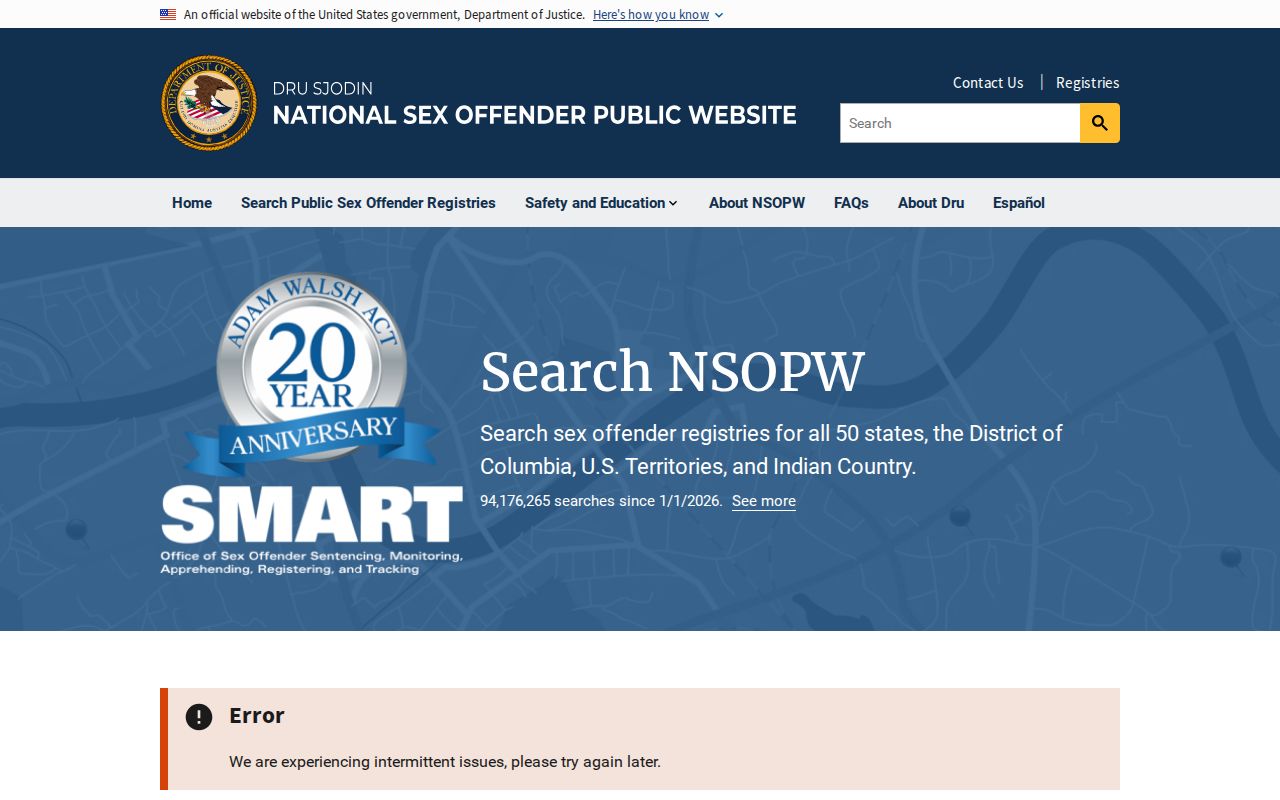
The National Sex Offender Public Website, or NSOPW, is the U.S. Department of Justice search layer for participating public registries. It is useful when an address search crosses the Potomac, when a person may have moved between states, or when a Virginia-only query does not answer a multi-state question. NSOPW gathers public search access across jurisdictions, while the source state remains responsible for its profile and updates.
Search Virginia first for the state's full presentation, then use NSOPW for reach. If the national result points back to Virginia, compare it with the VSP record. If it points to another jurisdiction, follow the source registry for the controlling profile. Differences can reflect update timing, local display rules, or separate ways of naming an offense.
The official NSOPW home page provides the national search interface.
Registration Requirements and Levels in Virginia
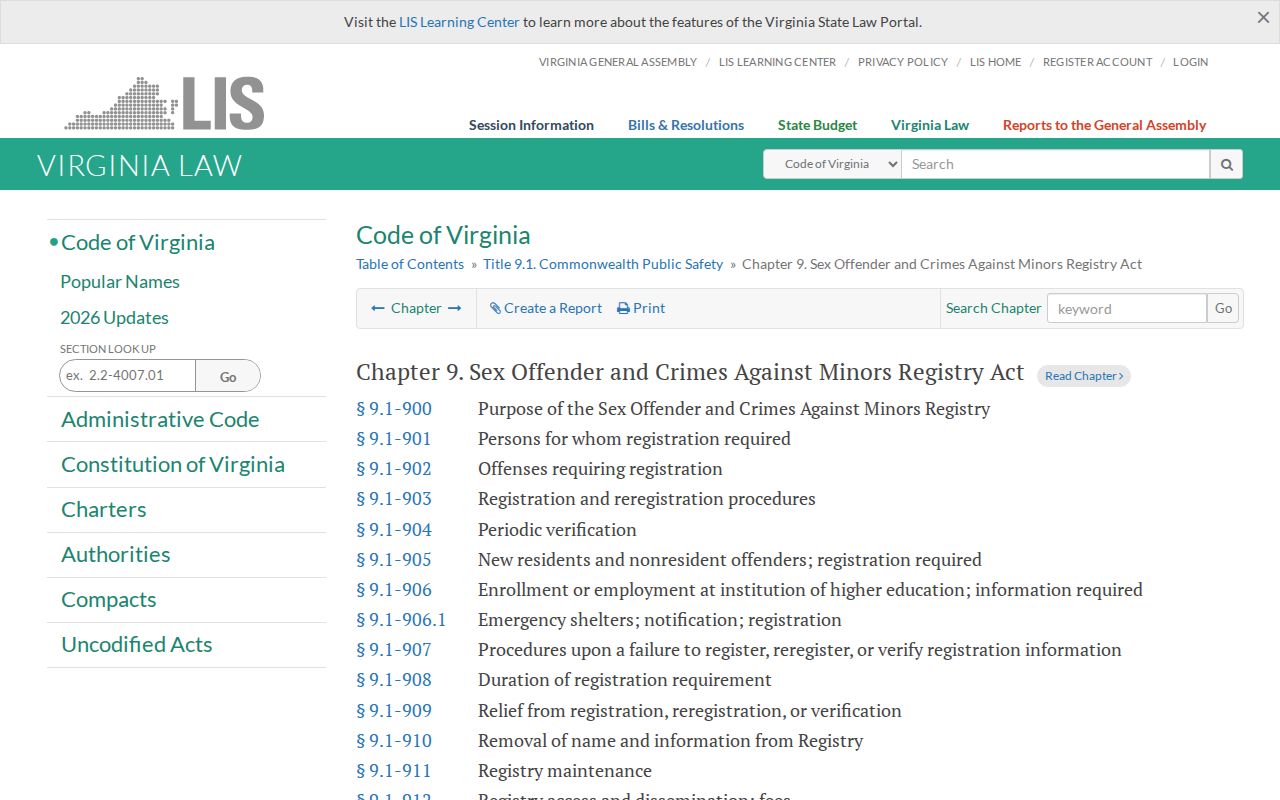
Virginia registration is governed by the offense categories and rules in Title 9.1. It should not be reduced to federal SORNA tier labels. Code §9.1-908 generally imposes lifetime registration for sexually violent offenses and murder. Other qualifying offenses generally carry a statutory period, while Code §9.1-910 contains petition and removal rules. Repeat status, offense date, and later amendments can change the answer for a specific profile.
| Virginia classification | General duration | Public reading point |
|---|---|---|
| Sexually violent offense or murder category under §9.1-908 | Generally lifetime registration | Confirm the exact offense and statutory basis shown on the profile. |
| Other qualifying offense | Statutory registration period | Do not assign a federal tier label when Virginia uses its own category. |
| Repeat or amended statutory status | May change the applicable duration | Offense date and later qualifying events can affect duties. |
| Petition or removal eligibility under §9.1-910 | Depends on the statute and court action | A person remains listed unless and until lawful relief changes the duty. |
Verification frequency is also offense and status specific. Do not infer a schedule from a broad label. A public profile should be read for the classification, status, and verification facts it actually states. For an official interpretation of a person's legal duty, the statute, source court order, VSP, and assigned registration authority control.
The official Virginia registry statutes in Title 9.1 set the framework for registration, publication, removal, and lawful use.
Arlington County Registry Labels Need Care
Registry status and criminal case status are not the same. A profile's “compliant” or similar status concerns registration duties as the registry reports them. It does not erase the qualifying conviction. A noncompliant or absconded label raises a registration issue, but it should not be rewritten as proof of a new offense without a court record. Likewise, a court docket may use an offense title that differs from the registry's public description.
When labels conflict, compare the offense jurisdiction, statutory citation, conviction date, and final order. The Arlington General District Court and Circuit Court portals may supply public case metadata, but the clerk holds the official file. A registry entry also may reflect a conviction from another state. In that case, the originating court and source registry are the right places to verify the offense and outcome.
Physical facts should be handled with equal care. Photographs age. Weight, hair, vehicles, work, school, and location facts can change. Use several reported identifiers before concluding that a record concerns a known person.
Report Arlington County Registry Noncompliance
Suspected noncompliance should be reported to law enforcement, not investigated through personal contact. Use the reporting route shown by the VSP registry when available. For an Arlington County matter, ACSO can direct the report to the staff responsible for local registration duties. Give the profile, observed fact, date, and place without adding rumor or trying to obtain more information from a registrant or household. A request for an existing sheriff record is different and follows the ACSO records-request channel.
A missing result does not by itself prove noncompliance. Spelling, aliases, a recent move, jurisdiction changes, search radius, or update timing can affect what appears. Repeat the search with a second method, check NSOPW when interstate movement is possible, and provide the official profile link when contacting law enforcement. In an emergency or when conduct poses an immediate threat, call emergency services.
Lawful Use and Community Notification
The public registry supports personal and family safety, neighborhood awareness, and informed community planning. It does not authorize harassment, threats, public shaming, or confrontation. Use official profile facts, respect the limits of the record, and report safety concerns through law enforcement. A listed qualifying offense is historical information. The profile does not show that a person committed a new act at the registered location.
Registry misuse is a crime: Virginia Code §9.1-918 prohibits using registry information to intimidate or harass a registrant or that person's family or household.
Community notification should come from the public registry and lawful agency channels. Do not copy personal data into an unofficial alert or encourage others to visit an address. When a record appears wrong, use its report or update contact. When suspected noncompliance is the issue, contact VSP or Arlington County law enforcement and let trained staff verify it.
Note: Registry information supports awareness, but only a court record can establish a new charge or conviction.